How to Get Your AC Ready for Hurricane Season in Jacksonville and Yulee
To get your AC ready for hurricane season in Jacksonville and Yulee, book a pre-season tune-up, clear leaves and loose items away from the outdoor unit, confirm surge protection is in place, check the condensate drain and drainage around the pad, and learn where the disconnect is so you can shut the system down safely before a storm arrives. After the storm passes, inspect the unit for debris and standing water before you turn it back on.
That short list covers the steps that matter most, and the rest of this post explains the reason behind each one. A storm tests every weak point in a cooling system at once: heat, humidity, salt air, wind-driven debris, and power flickers all arrive together.
Why Storm Season Is Hard on an Air Conditioner
Northeast Florida asks a lot of an air conditioner even on a calm summer day. Afternoon heat keeps the system running for long stretches, and humid air means the indoor coil and drain line are always moving moisture out of the home. Salt air, heavier near the coast, wears metal parts, electrical connections, and coil fins faster than it would inland.
A storm adds wind and water to that everyday load. Wind turns loose yard items into debris that can bend coil fins, block airflow, or damage the fan. Lightning and the power swings that come with it can stress control boards and motors. That is why a system that was already running weak often fails during the first big storm of the season.
Homes in Yulee and across Nassau County sit close to marsh, pines, and open lots, so leaves, pine needles, and sand find their way into outdoor units all year. In Jacksonville, from the Northside to the Southside and out toward the beaches, afternoon thunderstorms can deliver the same surge and debris risks as a named storm, just on a smaller scale.
Start With a Pre-Season Tune-Up
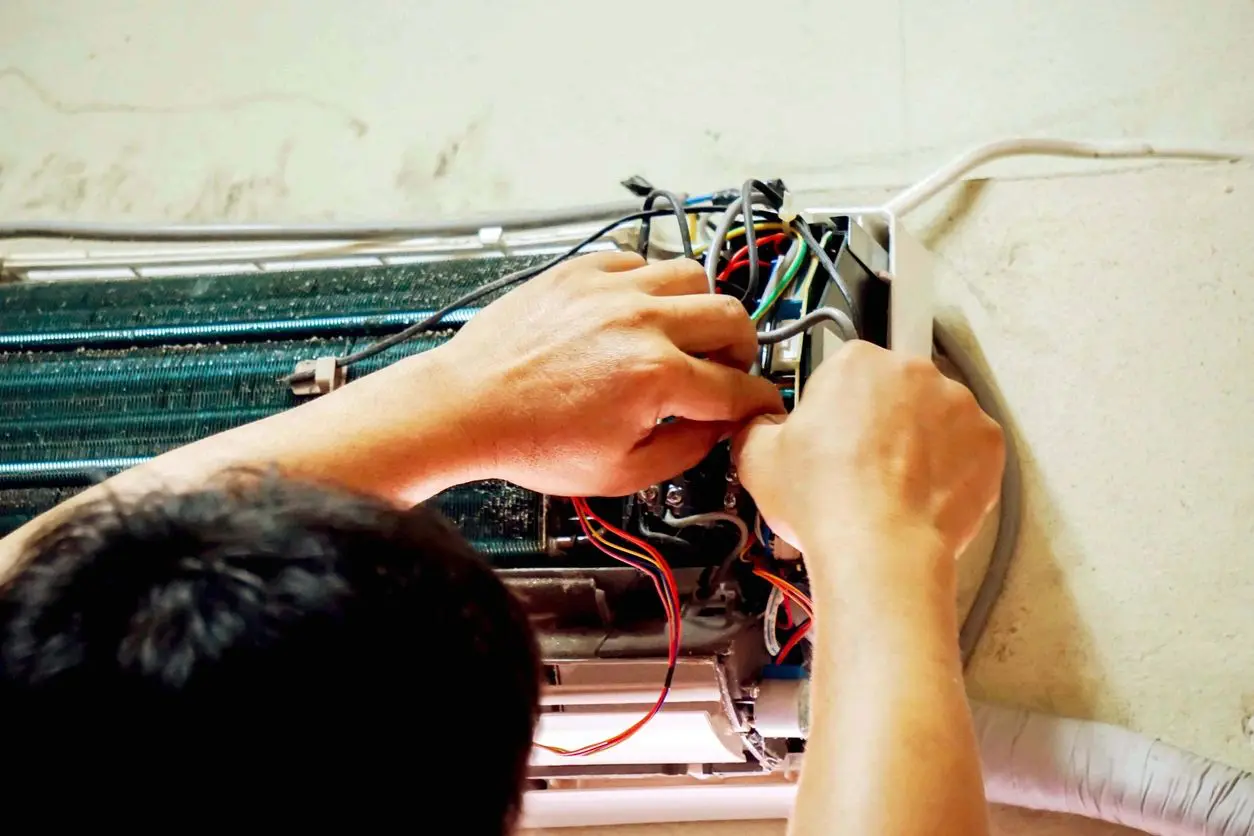
The best time to find a weak capacitor, a dirty coil, or a drain line that is starting to clog is on a calm day, not the night before landfall. During a tune-up, a technician checks refrigerant charge, cleans the coils, tightens electrical connections, tests the capacitor and contactor, clears the drain line, and confirms the thermostat is reading correctly. If your system is due for routine AC maintenance, schedule it before the season peaks.
Secure the Outdoor Unit and Clear Its Breathing Room
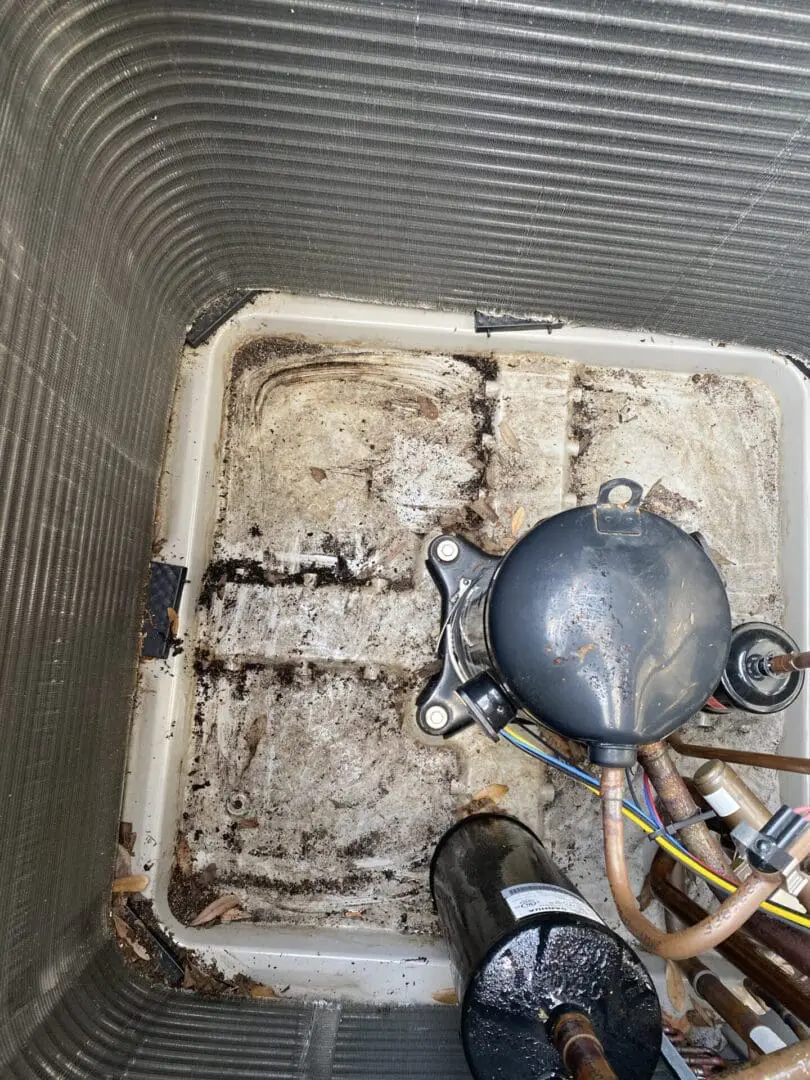
Your outdoor unit needs open air on every side to do its job. The fan pulls air through the coil fins, and anything pressed against the unit, from shrubs to stacked firewood, chokes that airflow and makes the compressor work harder. Before a storm, walk around the unit and clear leaves, mulch, toys, and yard tools. Trim shrubs back so branches cannot whip the fins in high wind.
Do not wrap the unit in plastic or a tight cover for a storm. A sealed wrap traps moisture against the metal, and a loose tarp can tear free and become debris itself. If the pad has shifted or sunk, ask a technician about it before the season rather than trying to level it yourself.
Protect the System From Power Surges
Lightning does not have to strike your home to hurt your air conditioner. A strike nearby, or the power switching that happens when lines go down and crews restore them, can send a voltage spike through the wiring. Control boards, motors, and compressors are sensitive to those spikes, and surge damage is a common reason a system will not start after a storm.
A dedicated HVAC surge protector, installed at the outdoor unit, gives that spike a safer path and helps shield the equipment. If you already have one, ask your technician to check it during your tune-up, since a protector that has already absorbed a large spike may need replacing.
When the power flickers during a storm, give the system time. Most thermostats include a short delay before they call for cooling again, and that delay protects the compressor from starting against pressure that has not equalized. If the power is cycling on and off, leave the thermostat off until the power stays steady.
Check Drainage Before Heavy Rain
An air conditioner removes a large amount of moisture from a Florida home on a hot day, and all of it leaves through the condensate drain line. When that line clogs with algae or sludge, water backs up, a safety float switch trips the system off, or water finds its way onto a ceiling or floor.
Ask your technician to flush and clear the drain line during your tune-up, and keep the area where the line exits the home free of mulch and stored items. Around the outdoor unit, the ground should carry rain away from the pad rather than pooling against it. If water is pooling at the pad, keep clear of the unit and call for help.
Know How to Shut the System Down Before a Storm
If a serious storm is forecast for your neighborhood, shutting the system down ahead of it is a simple way to protect it. Turn the thermostat to off first, then switch off the outdoor disconnect near the unit. Turning the thermostat off first lets the system stop in an orderly way instead of cutting power while the compressor is running.
Never touch the disconnect, the breaker, or the unit while you are standing in water. If floodwater reaches the outdoor unit, leave the system off and call a professional before restarting it. Water inside electrical parts can cause damage that is not visible from the outside, and a careful check is worth more than a fast restart.
After the Storm: Restart in the Right Order
Once the storm has passed and the power is steady, walk out to the unit before you turn anything on. Clear leaves and branches from the coil and the fan grille, look for standing water at the pad, and check that the refrigerant lines and wiring look intact. If the unit was under water, or if you see damaged wiring or bent fan blades, leave the system off and call for air conditioning repair.
If the unit looks clear, turn the thermostat back on and listen. The fan and compressor should start smoothly, and cool air should reach the vents within a few minutes. If the breaker trips again, if the system short cycles, or if you hear grinding or smell burning, turn it off and leave it off.
If your system needs attention after a storm, our diagnostic is $99, and it is not waived. We will show you the price in writing, with photos, before work starts, and our technicians are paid by the hour, with no commission. Minor repairs often land between $150 and $400, and replaced parts carry a 1-year limited parts warranty.
When to Call Comfort Zone Before the Next Storm
Call before the next storm if you notice weak airflow, warm air from the vents, short bursts of on-and-off running, humidity that stays high indoors, a breaker that has tripped more than once, or water near the unit. Each of those signs points to a weakness a storm can turn into a failure.
Comfort Zone of North Florida has served Nassau County since 2009, and our technicians are EPA certified, factory trained, and NATE certified. We are a Carrier Factory Authorized Dealer and a top 10 Carrier dealer in Florida, and new installs carry a 10-year limited manufacturer parts warranty. We are open 24/7 with online booking. Call (904) 406-0070 or book online, and we will help you get the system ready before the next forecast turns serious.
For our neighbors in Yulee and across Nassau County, and for homeowners throughout Jacksonville, a calm afternoon is the right time to prepare.

Tags: