
Why Your AC Might Blow Warm Air
Why Your AC Might Blow Warm Air
Few things are more frustrating than walking over to a vent expecting cool relief and getting a warm breeze instead. In Florida, where AC failures happen most often during the hottest days of the year, warm air from the vents can go from annoying to serious very quickly. The good news is that most causes of warm-air AC problems are diagnosable, and many can be resolved with a quick fix or a professional service call. Understanding the common causes helps you know when to try a simple solution and when to pick up the phone.
Comfort Zone of North Florida handles warm-air AC calls throughout Jacksonville, Mandarin, Ponte Vedra, and the surrounding communities. Here are the most common reasons your AC might be blowing warm air.
The Thermostat Is Set Incorrectly
It sounds obvious, but this is the number one call we get, and often the fastest fix. Check that your thermostat is set to “cool” rather than “heat” or “fan only.” Confirm the fan setting is on “auto” rather than “on,” which can circulate air without actually cooling. Make sure the temperature setting is lower than the current room temperature.
Sometimes children, pets, or accidental button presses change the settings without anyone noticing.
The Air Filter Is Severely Clogged
A dirty filter restricts airflow so much that the evaporator coil cannot absorb heat properly. In severe cases, ice forms on the coil, which blocks airflow completely and pushes warm attic air back into the ducts. Check the filter. If it looks gray, fuzzy, or solid with debris, replace it immediately. If you are a pet owner, consider changing your filters more frequently.
If your system has been running with warm air for a while and you see ice on the indoor unit or refrigerant lines, turn the system off for a few hours to let the ice melt, then replace the filter and try again. Our blog on when to replace your HVAC filter covers proper filter maintenance.
The Outdoor Unit Has Lost Power
Your AC has two main components: the indoor air handler and the outdoor condenser. If only the indoor unit is running, you get airflow but no cooling. Walk outside and check whether the outdoor unit is running. If it is silent, check the breaker for the outdoor unit in your electrical panel and reset it if needed.
If the breaker trips again immediately, do not keep resetting it. That points to an electrical problem that needs professional attention.
Low Refrigerant Charge
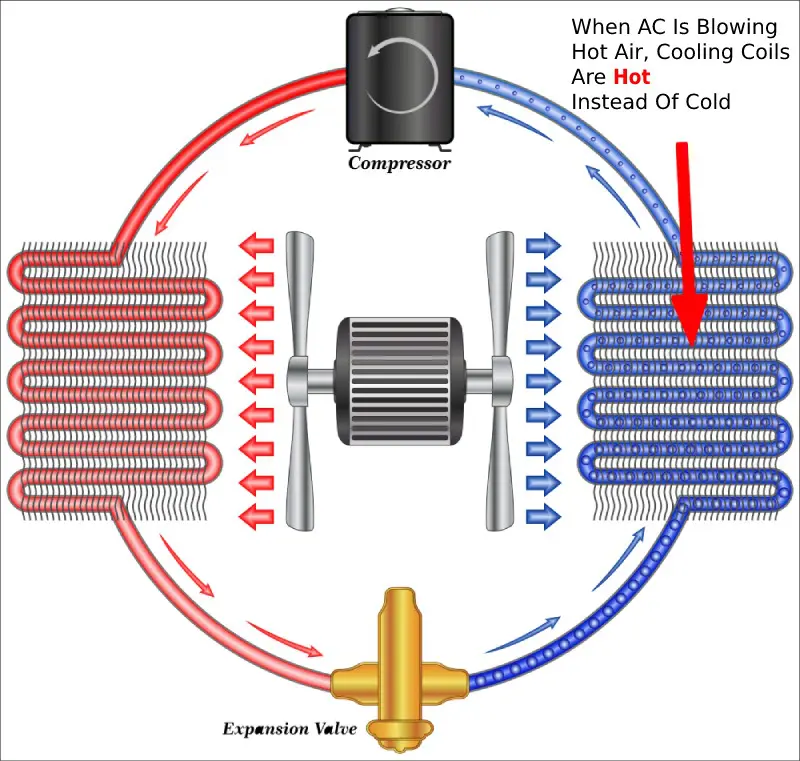
Refrigerant is what actually absorbs heat from your indoor air and moves it outside. If your system has developed a leak and refrigerant is running low, the system cannot cool effectively. Signs of low refrigerant include warm air from vents, ice on the refrigerant lines or coil, hissing sounds near the indoor unit, and longer cooling cycles.
Refrigerant is not something you should top off yourself. A professional needs to locate and repair the leak before adding new refrigerant, or you will just lose it again.
The Evaporator Coil Is Frozen
A frozen evaporator coil is one of the most common causes of warm air from the vents. When ice covers the coil, air cannot pass through and cooling stops. Common causes of freezing include restricted airflow from a dirty filter, low refrigerant, a failing blower motor, or extended runtime during extreme heat.
The immediate fix is to turn the system off and let the ice melt completely, which can take several hours. Then address the underlying cause before running the system again. If freezing keeps happening, professional diagnosis is essential.
The Condenser Coil Is Dirty
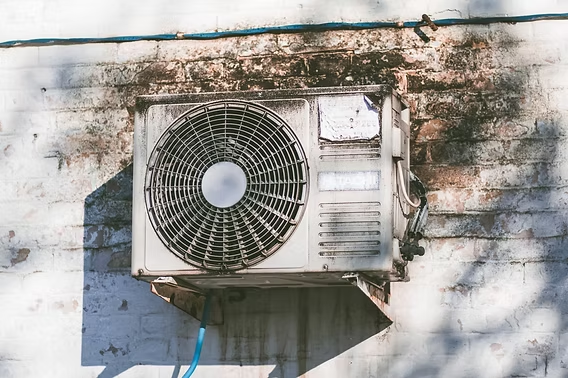
The outdoor condenser needs to release heat into the outside air. If the coil is covered in grass clippings, dirt, salt, or biological growth, heat cannot escape efficiently. The system runs but cannot cool because it cannot dump the heat it has absorbed. Rinse the outdoor coil gently with a garden hose to remove surface debris, and schedule professional cleaning if the buildup is severe.
Coastal homes especially benefit from regular coil cleaning to combat salt buildup.
The Compressor Has Failed
The compressor is the heart of your AC system. When it fails, cooling stops entirely, even though the fans and blower may continue running normally. Compressor failure is one of the most serious and expensive AC problems. Signs include warm air from vents, the outdoor fan running but no cooling happening, unusual clicking or humming from the outdoor unit, and the breaker tripping repeatedly.
At this point, professional service is essential, and depending on the age of the system, replacement may be more cost-effective than repair. Our AC replacement services walk through the decision-making process.
Ductwork Is Leaking or Disconnected
If your ducts have significant leaks or a section has disconnected in the attic, cool air is escaping before it reaches your vents while hot attic air enters the return side of the system. The result is weak, warm airflow at the vents. This is more common in older homes and after major storms that shake ductwork loose. Professional duct sealing and insulation usually solves this problem.
The Thermostat Itself Is Faulty
Occasionally the thermostat itself fails or loses calibration, sending the wrong signals to the system. If everything else looks fine but the AC will not cool, a bad thermostat is worth checking. Smart thermostats can also lose their programming after power outages, so verify all settings if you have had recent electrical events.
The System Is Simply Overwhelmed
During extreme Florida heat, an aging or undersized AC may simply be unable to keep up. If the outdoor temperature is above 100 degrees and your AC is trying to cool the house to 68, the system cannot deliver that difference no matter how hard it works. In this case, the air coming from the vents may not feel truly cold even though the system is functioning correctly.
Setting a more realistic thermostat target and using ceiling fans usually restores comfort.
When to Call for Help
If a quick check of the thermostat, filter, and outdoor unit does not restore cooling within an hour, it is time to call for professional service. Continuing to run a struggling system risks damaging the compressor, which is the single most expensive component to replace. A quick diagnostic visit almost always identifies the cause and prevents small problems from becoming big ones.
If your AC is blowing warm air and you are not sure where to start, Comfort Zone of North Florida is ready to help. Call us at (904) 406-0070 for fast, professional service across Northeast Florida.

Tags: